Drug Detox vs Rehab: What’s the Difference?
Drug detox and rehab are not the same, and they are not meant to be alternatives. Detox is the first step in recovery and focuses on safely managing withdrawal and stabilizing the body. Rehab follows detox and focuses on therapy, structure, and long-term recovery.
Detox may help you get through the physical symptoms of stopping, but it does not address the underlying patterns that lead to substance use. Rehab provides the support, tools, and environment needed to maintain long-term change.
In most cases, it’s not a question of detox vs rehab. People often need both as part of a complete treatment process.
Understanding the role each level of care plays can make the next step feel clearer and less overwhelming.

What Is the Difference Between Detox and Rehab?
Although detox and rehab are closely connected, they serve different purposes during recovery.
Detox
Detox is often the first step for people experiencing withdrawal symptoms or physical dependence.
For individuals who need withdrawal support, medical detox in Los Angeles can provide a structured and medically supervised environment.
During detox, the focus is on:
- Managing withdrawal symptoms
- Physical stabilization
- Medical monitoring and support
- Short-term care during the early phase of recovery
Rehab
Rehab focuses on the emotional, behavioral, and psychological side of recovery after stabilization begins.
Rehab often includes:
- Individual and group therapy
- Relapse prevention strategies
- Daily structure and routine
- Emotional and behavioral support
- Longer-term recovery planning
Treatment may be residential or outpatient, depending on the level of support needed.
A residential treatment program can provide a more structured setting for people who need continued support after detox.

Detox vs Rehab: Key Differences
Detox | Rehab |
Focus: Physical stabilization | Focus: Behavioral and emotional recovery |
Timeline: Several days | Timeline: Weeks to months |
Purpose: Manage withdrawal symptoms safely | Purpose: Address patterns behind substance use |
Environment: Medically supervised setting | Environment: Structured therapeutic setting |
Outcome: Prepares you to begin treatment | Outcome: Builds long-term stability and relapse prevention |
Get Clarity on What Level of Care Fits Your Situation
Not everyone needs the same type of support. For some people, detox is the starting point. For others, continued treatment is what helps recovery become more sustainable.
Understanding the difference between detox and rehab can make the next step feel more manageable and less uncertain.

Is Detox or Rehab the Right Choice?
Many people compare detox and rehab as though they are separate options, but they are designed to work together rather than replace one another.
Detox focuses on the immediate physical side of recovery. It helps the body stabilize during withdrawal and creates a safer starting point for treatment. Rehab begins after that stabilization and focuses on the emotional, behavioral, and psychological patterns connected to substance use.
In most cases, it’s not detox or rehab, it’s detox followed by rehab.
People often begin with detox because withdrawal feels urgent, but recovery usually requires continued support beyond the first few days.

How Detox and Rehab Work Together?
Detox and rehab are designed to support different stages of recovery, and they are often most effective when used together rather than separately.
Together, they create a more complete recovery process:
- Detox helps stabilize the body during withdrawal
- Rehab focuses on behavioral and emotional recovery
- Therapy and structure help reduce relapse risk
- Continued support helps recovery feel more sustainable over time
- Detox without continued treatment may only create a temporary change
- Rehab without stabilization can be difficult when withdrawal symptoms are still active
One without the other can leave important gaps in care. Research from the National Institute on Drug Abuse shows that ongoing treatment and continuing care improve long-term recovery outcomes, especially when support continues beyond the initial detox phase.
Recovery often becomes more manageable when stabilization is followed by continued structure and support.
For many people, this means transitioning into a structured residential treatment program after detox, where support continues beyond the initial stabilization phase.
What Happens If You Only Do Detox?
This is often where people feel confused — physically, things may feel better, but the patterns that led to substance use are still there. Without continued support, it can become difficult to maintain progress once daily life resumes.
Detox can help the body recover from the immediate effects of substance use, but it does not usually address the reasons substance use continued in the first place.
Without continued support, people may still struggle with:
- Stress and emotional triggers
- Cravings that return over time
- Familiar routines or environments connected to substance use
- Difficulty maintaining changes once daily life resumes
Many people feel physically better after detox but still struggle with the habits, stressors, or patterns connected to substance use.
This is one reason relapse risk tends to remain high when detox is treated as the entire recovery process rather than the beginning of one.


How to Know What You Might Need?
The difference between detox and rehab often becomes clearer when you look at what’s actually been hardest for you — stopping, or staying stopped.
Understanding where you are struggling most can help clarify what type of support may be most effective.
You may need detox if:
- You experience withdrawal symptoms when trying to stop
- You feel physically dependent on substances
- You are worried about withdrawal or managing symptoms safely
- Stopping suddenly feels physically overwhelming
You may benefit from rehab if:
- You’ve stopped before but returned to use
- You feel stuck in the same patterns despite wanting change
- Substance use is affecting work, relationships, or daily functioning
- Staying sober becomes difficult after the initial stopping phase
Signs You May Need More Than Detox
Detox can help with immediate stabilization, but sometimes the bigger challenge is maintaining change afterward.
You may need more than detox if:
- You’ve stopped before, but couldn’t maintain it
- Withdrawal isn’t the only issue affecting you
- You still feel stuck even after trying to quit
- The same patterns keep repeating despite your efforts
In many cases, the issue is not simply getting substances out of the body. It is learning how to navigate stress, triggers, routines, and behaviors once daily life resumes.

Talk Through Your Situation with Our Team
You do not need to already know what level of care you need. Many people reach out because they are trying to understand whether detox, rehab, or continued support makes the most sense for their situation.
At Changes Wellness, the focus is on helping you get clarity without pressure.
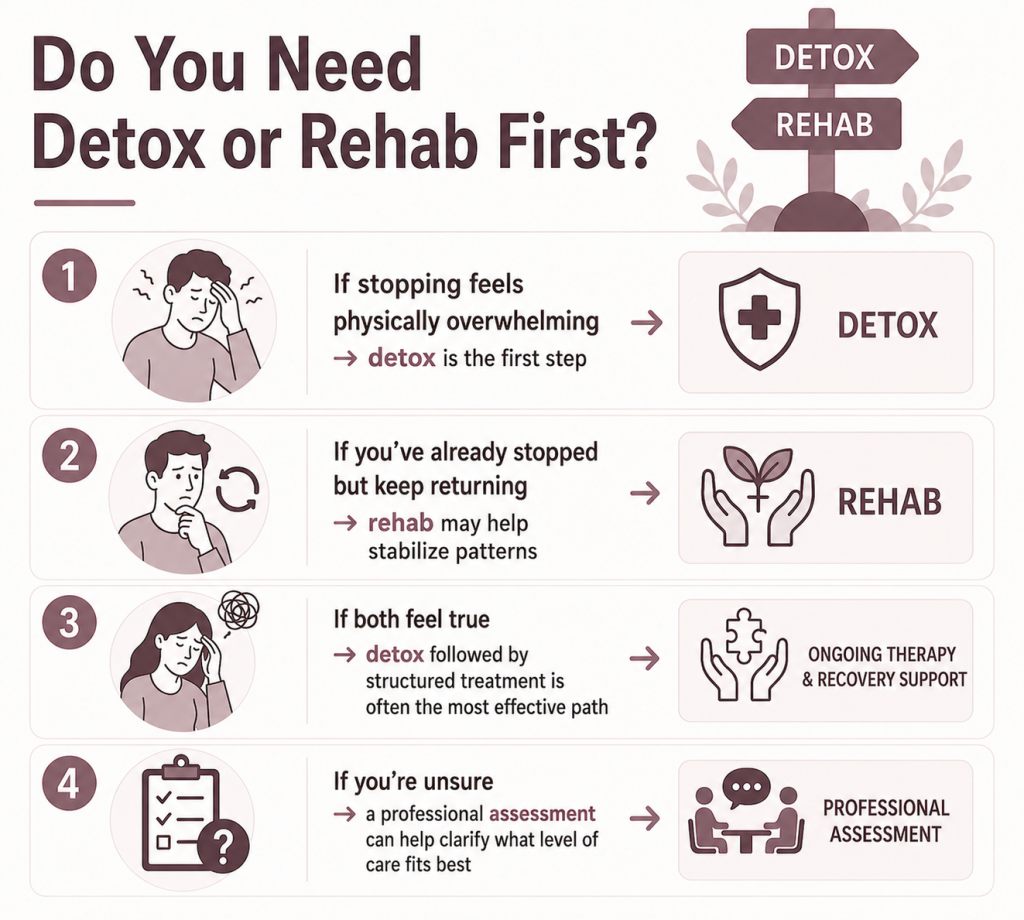
Should You Start With Detox or Rehab?
The right starting point often depends on what you are currently struggling with most.
If you have withdrawal symptoms:
Detox is usually the safest first step, especially when physical symptoms or dependence make stopping difficult. A structured medical detox in Los Angeles can help manage withdrawal in a more supported environment.
If you’ve already completed detox but keep relapsing:
Rehab or structured treatment may help address the underlying patterns, stressors, and behaviors connected to substance use.
If you feel emotionally or behaviorally stuck:
Ongoing therapy and recovery support may provide more benefit than detox alone, particularly if maintaining sobriety feels difficult over time.
If you’re unsure what level of care fits:
A professional assessment can help determine what kind of support may be most appropriate based on your symptoms, history, and current situation.